


The automotive industry is undergoing a profound transformation, driven by advancements in extended reality (XR) technologies. Among these, augmented reality (AR) stands out as a game-changer, promising to redefine driver experience, safety, and connectivity. No longer confined to science fiction, the integration of AR into vehicles is rapidly becoming a tangible reality, with leading companies pushing the boundaries of what's possible. From enhancing navigation to providing critical safety warnings directly on the windshield, the future of driving is undeniably immersive and intelligent. As we delve into this exciting frontier, it's clear that innovations like those explored by MetanexusXR are paving the way for a new era of automotive technology. This article explores **Augmented Reality in Cars — the Companies & Tech Driving Us into the Future**, detailing the innovations that are steering us toward an unprecedented future on the road.
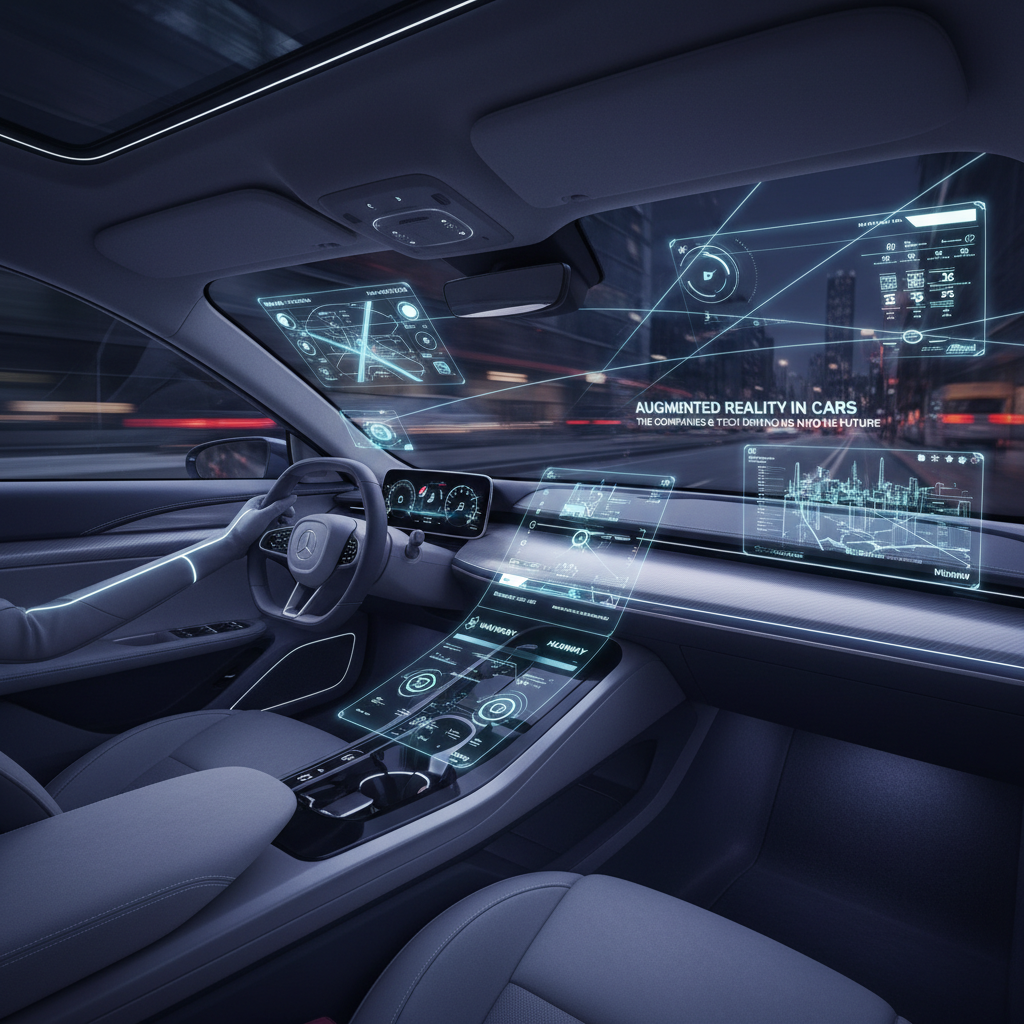
The integration of augmented reality into the automotive landscape represents more than just a technological upgrade; it's a paradigm shift in how we interact with our vehicles and the world around us. By overlaying digital information onto the real-world view through the windshield or dedicated displays, AR systems provide drivers with contextual, real-time data without diverting their attention from the road. This capability significantly enhances safety, streamlines navigation, and offers a glimpse into a future where cars are truly intelligent co-pilots.
Augmented Reality in Cars — The Key Players & Their Groundbreaking Tech
Several pioneering companies are at the forefront of developing sophisticated AR solutions for vehicles, each bringing unique innovations to the table. Their distinct approaches are collectively shaping the landscape of in-car AR:
WayRay: Holographic AR & Immersive Fields of View
WayRay is a standout innovator with its True AR system, leveraging holographic AR technology. Unlike traditional HUDs, WayRay’s system uses a holographic optical element (HOE) embedded in the windshield to project sharp, depth-perceived virtual images. This technology boasts an impressive 180° field of view (FOV), projecting information across the entire windshield. This wide FOV eliminates motion sickness often associated with conventional AR experiences, providing a truly immersive and comfortable display. WayRay's system integrates seamlessly with vehicle sensors like LiDAR, radar, and cameras to provide ADAS features such as real-time navigation overlays, blind spot warnings, lane-keeping assistance, pedestrian detection, and intelligent parking assistance. Their focus on 'true' AR without special glasses sets a high bar for the industry.
Continental: Robust & Adaptive AR-HUDs
Continental’s approach to AR-HUDs utilizes advanced optics, including mirrors, lenses, and a digital micromirror device (DMD), to project a large virtual image that appears to float several meters in front of the vehicle. This system can display a virtual image equivalent to 130 inches at a distance of 10 meters, offering clear and easily digestible information. Continental's AR-HUDs are designed to integrate deeply with existing ADAS, providing dynamic lane guidance, distance warnings, and traffic sign recognition directly in the driver's line of sight, enhancing situational awareness in diverse driving conditions. For those interested in the broader spectrum of immersive tech that complements such automotive advancements, exploring MetanexusXR's full collection can offer insights into how these technologies converge.
Panasonic: Eye-Tracking & Dynamic Graphics
Panasonic’s AR-HUDs are distinguished by their advanced optics and eye-tracking capabilities. This technology ensures that the projected information is always optimally aligned with the driver's gaze, adapting to head movements and maintaining clarity. Panasonic's systems project dynamic graphics onto the road ahead, providing turn-by-turn navigation, current speed, lane departure warnings, object detection, pedestrian alerts, and traffic sign information with exceptional precision. The intuitive nature of their display aims to reduce cognitive load and improve reaction times.
Hyundai Mobis: 3D Content & Wide FOV
Hyundai Mobis has developed an AR-HUD that projects sophisticated 3D content directly onto the road. Their proprietary optical technology achieves a wide field of view, typically ranging from 10-12 degrees horizontally and 3-5 degrees vertically. This enables the display of vivid, three-dimensional graphics that appear as part of the real world. Integrated with advanced sensor fusion, their system provides critical information such as navigation cues, lane departure warnings, and blind spot alerts with a sense of depth and realism that significantly aids driver perception.
MG Motor: Production Vehicle Integration with L3 Autonomy
MG Motor has brought AR-HUD technology into production vehicles, notably with the MG ONE. This system is integrated with Level 3 autonomous driving features, showcasing the practical application of AR in current-generation cars. It provides crucial information for navigation, ADAS functions like lane-keeping assist, and adaptive cruise control, demonstrating how AR can support semi-autonomous driving capabilities in real-world scenarios.
Huawei: Entertainment & Comprehensive Information Displays
Huawei’s AR-HUD focuses on a blend of safety, navigation, and entertainment. Their system boasts an impressive virtual display size, equivalent to a 70-inch screen viewed from 7.5 meters, with a wide field of view of 13°x5°. This high-definition display can show dynamic weather information, advanced navigation, ADAS alerts, and even infotainment content and gaming. Huawei emphasizes a holistic experience, transforming the windshield into a versatile information hub. To delve deeper into the accessories that can enhance these immersive experiences, consider browsing MetanexusXR's VR accessories, which share a common thread of enhancing user interaction with digital realities.
Technical Specifications & The Future of Augmented Reality in Cars — the Companies & Tech Driving Us into the Future
The technical prowess behind these AR systems is astounding. Common denominators include advanced sensor fusion, combining data from LiDAR, radar, cameras, and GPS to create a highly accurate digital twin of the environment. Artificial intelligence (AI) algorithms process this data, identifying objects, predicting movements, and rendering contextual information in real-time. The goal is to provide information that is not only accurate but also intuitive and non-distracting.
Key technical specifications often include:
- Field of View (FOV): Ranging from 5-13° for conventional systems to WayRay's groundbreaking 180°, dictating how much of the driver's view can be augmented.
- Virtual Image Size: From 70-inch equivalents (Huawei) to 130-inch equivalents (Continental), indicating the perceived size of the projected display.
- Projection Distance: Typically 7.5 to 10 meters, creating the illusion that information is on the road itself.
- Resolution & Brightness: High-definition displays with adaptive brightness ensure visibility in all lighting conditions.
- Latency: Minimal latency is crucial for real-time safety warnings and navigation.
Looking ahead, the future use cases for **Augmented Reality in Cars — the Companies & Tech Driving Us into the Future** are expansive. We can anticipate more sophisticated V2X (Vehicle-to-Everything) communication, where AR displays real-time information about nearby vehicles, infrastructure, and even pedestrians. Gesture control for interacting with AR elements, personalized infotainment experiences for passengers, and even more seamless integration with fully autonomous driving systems are on the horizon. These advancements promise to make driving safer, more efficient, and infinitely more engaging. For those eager to stay ahead of the curve in immersive technology, regularly checking MetanexusXR's latest offerings can provide access to cutting-edge devices and accessories that complement these automotive innovations.
The benefits are clear: reduced driver distraction, enhanced situational awareness, more intuitive navigation, and a generally safer and more enjoyable driving experience. As technology continues to evolve, augmented reality in cars will become an indispensable feature, transforming our daily commutes and long-distance journeys alike. The continuous innovation in this space is a testament to the power of XR to revolutionize industries beyond traditional gaming and entertainment, creating practical, life-enhancing applications.
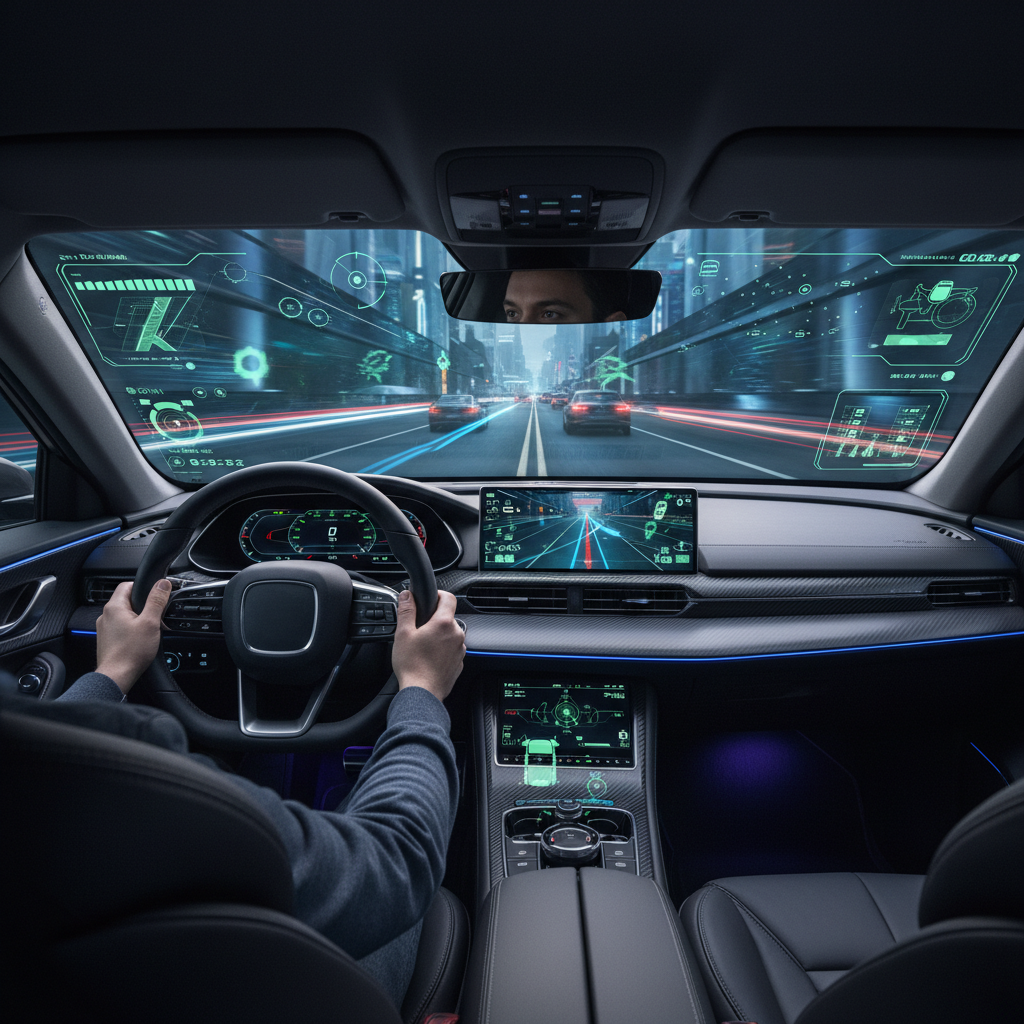
The journey of augmented reality in cars is just beginning, yet its impact is already profound. The innovations from companies like WayRay, Continental, Panasonic, Hyundai Mobis, MG Motor, and Huawei are not merely adding features; they are fundamentally redefining the automotive experience. By blending the digital with the physical, AR systems promise a future of safer, smarter, and more engaging drives, where critical information is seamlessly integrated into our perception of the road. As these technologies mature, we can expect AR to become a standard, indispensable component of every vehicle, propelling us into an era of truly intelligent and intuitive transportation. Explore the future of immersive experiences and discover how you can be a part of it by visiting MetanexusXR's New Arrivals today!
What Our Users Are Saying:
Review 1: "I test drove a concept car with AR navigation, and it was mind-blowing! No more looking down at a screen; the directions were right there on the road. It felt incredibly natural and safe." - Alex P.
Review 2: "The potential for AR in cars goes beyond just navigation. Imagine seeing real-time weather effects projected, or even gaming during autonomous travel. The possibilities are endless!" - Sarah L.
Join the Discussion:
- What AR feature are you most excited to see implemented in commercial vehicles?
- Do you believe AR in cars will significantly reduce accidents, and why?
- Beyond driving, what other in-car experiences could AR revolutionize for passengers?


