


In the rapidly evolving landscape of extended reality, few innovations capture the imagination quite like true holographic displays. Today, we're diving deep into an experience that redefines visual interaction: the MetanexusXR team presents an in-depth look at the Looking Glass Portrait — Unboxing the First Mainstream Holographic Display. This revolutionary device promises to bring glasses-free 3D visuals to our desktops and living rooms, a leap forward from traditional screens, offering a tangible glimpse into the future of digital content.
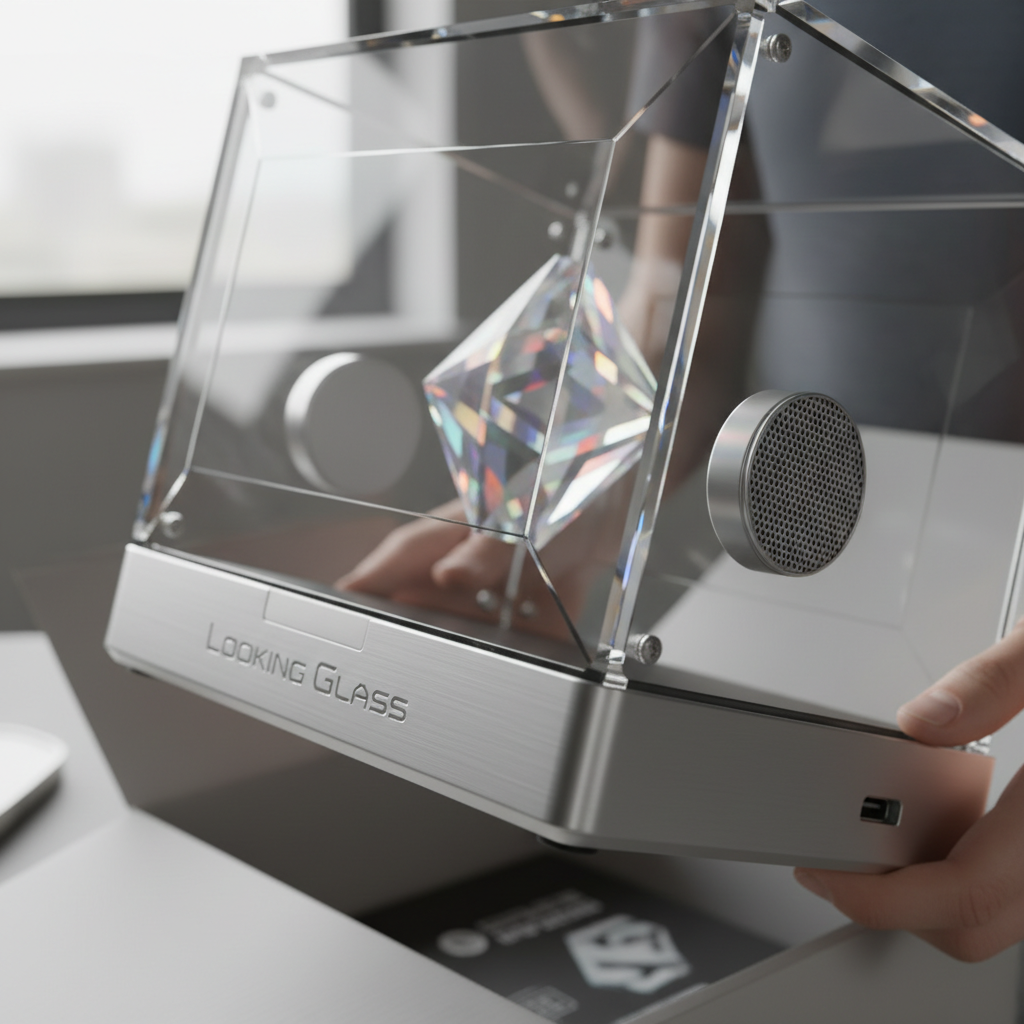
Looking Glass Portrait — Unboxing the First Mainstream Holographic Display: A First Look
The moment you unbox the Looking Glass Portrait, its elegance is immediately apparent. Housed in a compact, sleek form factor, it doesn't demand excessive desk space, making it a surprisingly practical addition to any creative workspace or home. With dimensions of approximately 7.9 x 5.9 x 2.8 inches (200 x 150 x 70 mm) and a weight of around 3.5 lbs (1.6 kg), it’s substantial enough to feel premium yet portable enough to be repositioned with ease. The setup is remarkably straightforward, a testament to its design as a truly mainstream device. Once powered on, the initial holographic demo content immediately showcases its 'wow' factor, drawing you into a world of depth and realism without the need for cumbersome glasses.
This isn't just another 3D screen; it's a dedicated lightfield display that projects 45 to 100 simultaneous views of 3D content, allowing multiple people to view the same holographic scene from different angles simultaneously, each seeing a unique perspective. This creates a genuine sense of volumetric depth that goes far beyond stereoscopic effects. The 7.9-inch diagonal display, boasting a sharp 2048 x 1536 (2K) resolution, renders intricate details with clarity, making digital objects feel almost tangible. The 50-degree viewing cone provides ample room for natural head movement, enhancing the illusion of physical presence for the holographic content.
Technical Deep Dive: Powering the Holographic Revolution
Beneath its elegant exterior, the Looking Glass Portrait packs impressive technical specifications designed for versatility and performance. Connectivity is streamlined, primarily utilizing a single USB-C port for both power and data transfer when connected to a computer. For those who prefer a dedicated display input, an HDMI port is also available, allowing for robust desktop mode functionality. One of its most compelling features is its standalone capability: the device can be powered by a portable USB-C power bank, transforming it into a truly portable holographic display. Imagine showcasing your 3D models or holographic photos on the go!
The system supports up to 10 inches of virtual depth, creating incredibly immersive scenes where objects appear to recede and project forward from the display surface. This level of depth manipulation is crucial for applications requiring realistic spatial representation, from medical imaging to architectural visualization. The integrated software, HoloPlay Studio, provides a user-friendly interface for managing, importing, and displaying 3D content. It's designed to be accessible to a wide audience, bridging the gap between complex 3D creation and simple holographic display.
Unleashing Creativity: XR Use Cases and Content Creation
The true power of the Looking Glass Portrait lies in its potential to transform how we interact with and share 3D content. For XR developers and 3D artists, it's a game-changer. The display is fully compatible with leading 3D creation tools such as Blender, Unity, and Unreal Engine, allowing creators to design and preview their work in true 3D without leaving the physical world. This eliminates the need for VR headsets for certain stages of development, streamlining workflows and providing a more natural viewing experience.
Beyond professional creation, the Looking Glass Portrait excels at capturing and displaying 'holographic photos.' With support for depth cameras like the iPhone's LiDAR, Azure Kinect, and Intel RealSense, users can easily capture real-world scenes as 3D lightfield images. These can then be directly loaded onto the Portrait, turning everyday moments into captivating holographic memories. This feature alone makes the device incredibly appealing to photographers, hobbyists, and anyone looking to preserve memories in a truly novel way. Explore more accessories for your XR journey at MetanexusXR VR Accessories.
From showcasing intricate product designs in retail environments to enhancing educational experiences with interactive 3D models, the use cases for this mainstream holographic display are vast. Architects can present building models that clients can walk around virtually, medical professionals can visualize complex anatomical structures, and educators can bring abstract concepts to life. It even opens new avenues for interactive art installations and unique digital signage. Dive into a world of possibilities for your holographic content with tools available at MetanexusXR All Collections.
Benefits for Every User: Why the Looking Glass Portrait Stands Out
The primary benefit is undeniably the glasses-free 3D experience. This removes a significant barrier to entry for many users and makes 3D content consumption far more comfortable and social. Its compact size and portability, especially with battery power, mean holographic displays are no longer confined to specialized labs but can be taken anywhere. The ease of content creation and display, particularly for 'holographic photos,' democratizes 3D content creation, making it accessible to a broader audience than ever before.
For businesses, it offers a compelling way to differentiate products and services, providing an engaging visual experience that captures attention. For consumers, it's a unique way to enjoy and share their digital memories and creations. The Looking Glass Portrait truly embodies the promise of extended reality, bringing the futuristic vision of holography into practical, everyday use, making it a critical piece of technology for any enthusiast or professional looking to push the boundaries of visual communication. Discover more innovative tech at MetanexusXR Collections.
The Looking Glass Portrait — Unboxing the First Mainstream Holographic Display marks a pivotal moment in the evolution of visual technology. It's not just a product; it's an invitation to experience and create in a fundamentally new dimension. By making glasses-free holography accessible and practical, it unlocks immense potential for creators, educators, and everyday users alike. This device proves that the future of immersive displays is not only here but is ready to integrate seamlessly into our lives, offering unprecedented ways to interact with the digital world. Don't miss out on the next wave of XR innovation. Explore New Arrivals at MetanexusXR!
---
User Reviews:
Jane D. (3D Artist): "Absolutely blown away by the Looking Glass Portrait! Being able to see my Blender creations in true 3D without a headset is a game-changer for my workflow and client presentations. It's surprisingly intuitive!"
Mark T. (Photography Enthusiast): "Capturing 'holographic photos' with my iPhone's LiDAR and seeing them come to life on the Portrait is surreal. It's like having a window into a moment, not just a flat picture. My family loves it!"
Discussion Questions:
- How do you envision holographic displays like the Looking Glass Portrait changing your daily interactions with digital content?
- What specific industries or creative fields do you think will benefit most from mainstream holographic technology?
- Given its portability and standalone capabilities, what new applications or public installations could the Looking Glass Portrait enable?


