


The landscape of 3D content creation is undergoing a significant transformation, driven by advancements in both hardware and software. At the forefront of this evolution, Apple has made a pivotal move that promises to democratize the creation of realistic 3D models. With the introduction of the Object Capture API, MetanexusXR and the broader XR community are poised to experience a new era of digital asset generation. This groundbreaking feature, where Apple Brings 3D Scanning to macOS Monterey with Object Capture, leverages the power of photogrammetry to turn ordinary photos and videos into highly detailed, PBR-ready 3D objects, opening up unprecedented possibilities for developers, designers, and enthusiasts alike.
Historically, creating high-fidelity 3D models from real-world objects was a complex, time-consuming, and often expensive endeavor, requiring specialized equipment and expertise. Apple's innovative approach aims to streamline this process, making it accessible to a wider audience while maintaining professional-grade quality. By integrating this capability directly into macOS Monterey, Apple is not just offering a new tool; it's fostering an ecosystem where the physical and digital worlds can merge with greater fluidity, profoundly impacting augmented reality (AR), virtual reality (VR), and mixed reality (MR) applications.
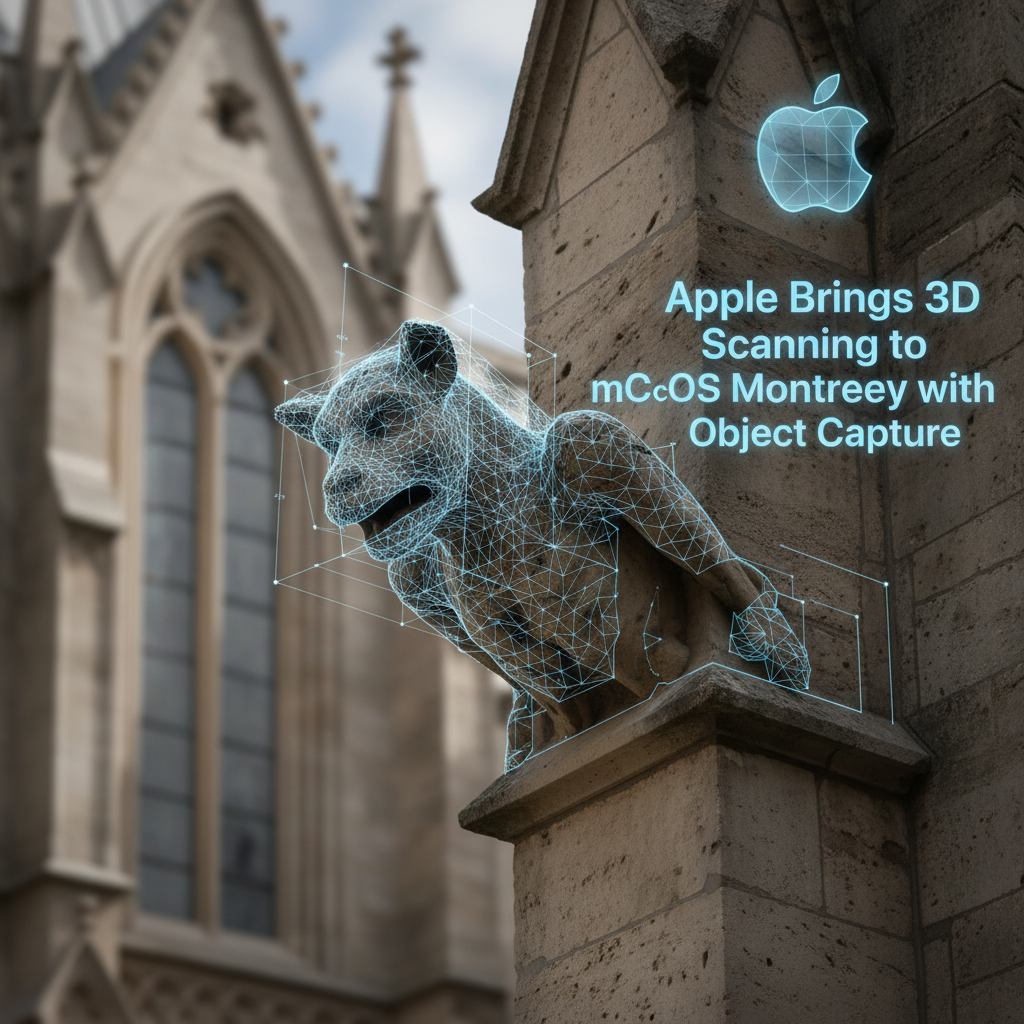
How Apple Brings 3D Scanning to macOS Monterey with Object Capture
The core of Apple's new 3D scanning capability lies within the Object Capture API, a sophisticated framework designed to simplify the photogrammetry pipeline. This technology allows developers to feed a series of 2D images—captured from various angles around a physical object using an iPhone, iPad, or even a professional DSLR camera—into the system. The API then intelligently processes these images, extracting depth, texture, and geometric data to reconstruct a highly accurate 3D model.
One of the most compelling technical specifications of Object Capture is its ability to generate Physically Based Rendering (PBR) ready assets. This means the resulting 3D models come complete with intricate texture maps, including albedo, normal, roughness, and metallic maps, ensuring they react realistically to light in any virtual environment. The output formats are primarily USDZ (Universal Scene Description Zip) and Reality File, Apple's proprietary formats optimized for AR experiences and seamless integration across its platforms. This standardization simplifies asset deployment, making it easier for developers to incorporate real-world objects into their ARKit and RealityKit projects.
Performance is another key differentiator. Object Capture significantly accelerates the photogrammetry process. What once took hours or even days using traditional software and powerful workstations can now be accomplished in minutes on compatible Macs. This efficiency is largely attributed to Apple's deep integration of the API with its Metal framework and the optimization for Apple Silicon chips (M1, M2, M3, etc.), as well as Intel Macs equipped with a T2 Security Chip. This hardware-software synergy ensures rapid processing and high-quality output, even for complex scenes.
Unlocking XR Potential: Benefits and Use Cases
The implications of Apple's Object Capture technology for the XR industry are vast and transformative. Developers can now rapidly prototype and populate virtual worlds with hyper-realistic assets derived directly from the physical world. This capability is invaluable for:
- E-commerce and Retail: Imagine online shoppers being able to view highly accurate 3D models of products in their own homes via AR, from furniture to fashion. Businesses can create engaging, immersive shopping experiences that boost confidence and reduce returns.
- Gaming and Entertainment: Game developers can scan real-world props, environments, and even characters to create stunningly realistic game assets, dramatically reducing development time and enhancing visual fidelity. This elevates player immersion to new heights.
- Architecture, Engineering, and Construction (AEC): Architects can scan existing structures or models to create digital twins for planning, renovation, and virtual walkthroughs. Engineers can quickly digitize components for analysis and design iteration.
- Education and Training: Students can interact with 3D models of historical artifacts, biological specimens, or complex machinery in AR, making learning more engaging and accessible. Training simulations can incorporate real-world objects for practical, hands-on experience without physical risk.
- Cultural Heritage and Tourism: Museums can digitize their collections, allowing global audiences to explore priceless artifacts in immersive 3D. Tourist destinations can offer virtual tours with realistic digital replicas of landmarks.
- Creative Arts and Design: Artists can integrate scanned objects into their digital creations, blending physical sculptures with digital effects. Designers can rapidly iterate on physical prototypes by digitizing them for virtual manipulation.
The ease of use and high-quality output mean that even individuals without extensive 3D modeling experience can contribute to the growing library of digital assets. For those looking to dive deeper into XR development, having access to reliable and high-performance VR accessories is crucial for testing and experiencing these newly created 3D models. The ability to quickly generate assets empowers small studios and independent creators to compete with larger enterprises, fostering innovation across the entire XR ecosystem.
The Future of Content Creation with Apple Brings 3D Scanning to macOS Monterey with Object Capture
The introduction of Object Capture is more than just a new feature; it's a foundational step towards a more accessible and efficient future for 3D content creation. By lowering the barrier to entry, Apple is encouraging a new wave of creativity and application development, particularly in areas like AR and VR. The seamless workflow, from capturing images on an iPhone to generating a PBR-ready USDZ model on a Mac, exemplifies Apple's commitment to integrated ecosystems.
This technology also hints at a broader vision where reality capture becomes a ubiquitous tool, much like photography has become. As cameras on devices improve and computational power in Macs continues to grow, the fidelity and speed of 3D scanning will only increase. This will inevitably lead to richer, more dynamic XR experiences where the line between the digital and physical becomes increasingly blurred. For developers seeking to leverage these capabilities, staying updated with the latest in XR hardware and software is essential. MetanexusXR provides a comprehensive range of products to support this exciting journey.
The integration of Object Capture into macOS Monterey marks a significant milestone in the journey towards democratizing 3D content creation. By making advanced photogrammetry accessible and efficient, Apple has provided developers and creators with a powerful tool to bridge the gap between the physical and digital worlds. This will undoubtedly accelerate innovation in AR, VR, and various other industries, fostering an environment where immersive experiences are easier to build and more realistic than ever before. As the XR landscape continues to evolve, tools like Object Capture will be instrumental in shaping its future, empowering a new generation of digital pioneers. Don't miss out on the latest advancements that complement these innovations; explore the latest innovations today.
User Reviews
Reviewer 1 - 'XR_Dev_Guru': "Object Capture is a game-changer! I used to spend hours cleaning up scans, but Apple's API produces incredible PBR models in minutes. My AR apps have never looked so good. The integration with macOS Monterey is flawless."
Reviewer 2 - 'DesignMaven': "As a product designer, digitizing prototypes was always a bottleneck. With Object Capture, I can scan physical models with my iPhone and have a high-fidelity 3D asset on my Mac almost instantly. It's revolutionizing my workflow."
Discussion Questions
1. What specific industries do you think will benefit most immediately from Apple's Object Capture technology, beyond those mentioned?
2. How do you envision the quality and speed of 3D scanning evolving on Apple platforms in the next 3-5 years?
3. What ethical considerations or challenges might arise with the widespread ability to easily create realistic 3D models of real-world objects?


