


In an era where technology is constantly redefining how we interact with the world, a groundbreaking initiative is transforming our understanding of the past. The History of Europe Gets Immersive via HoloLens 2 Experience at St. Peter's Church in Belgium, offering visitors an unparalleled journey through time. This innovative mixed reality experience utilizes the power of the Microsoft HoloLens 2 to bring centuries-old art and architecture back to life, right within the historic walls where they once stood. It exemplifies how cutting-edge XR solutions can breathe new life into cultural heritage, making history tangible and deeply engaging for modern audiences. As pioneers in immersive technology, MetanexusXR celebrates such advancements that blend education, entertainment, and preservation.
This pioneering project at St. Peter's Church in Leuven, Belgium, is more than just a virtual tour; it's a meticulously crafted historical reconstruction. By donning the HoloLens 2, visitors witness lost masterpieces and architectural elements reappear with stunning realism, precisely anchored within their original physical locations. It's a testament to the potential of augmented reality to bridge the gap between historical documentation and lived experience, creating a profound connection to Europe's rich cultural tapestry.

HoloLens 2: The Technology Powering The History of Europe Gets Immersive via HoloLens 2 Experience at St. Peter's Church in Belgium
The success of the immersive experience at St. Peter's Church hinges entirely on the sophisticated capabilities of the Microsoft HoloLens 2. This advanced mixed reality headset serves as the conduit through which the past is resurrected, allowing visitors to see magnificent digital reconstructions overlaid onto the real-world environment. The collaboration between historical experts and innovative tech developers has created an experience that is both historically accurate and technologically seamless, making The History of Europe Gets Immersive via HoloLens 2 Experience at St. Peter's Church in Belgium a benchmark for cultural XR applications.
Unveiling Lost Masterpieces with Precision
At the heart of this experience is the recreation of iconic artworks like Rogier van der Weyden's 'Descent from the Cross' altarpiece, along with architectural elements such as the rood screen and jubé, which were lost or removed centuries ago. The HoloLens 2's ability to precisely anchor these digital holograms to specific points in the church is crucial. Its advanced spatial mapping technology continuously understands the physical environment, ensuring that the virtual reconstructions appear stable and perfectly aligned, regardless of where the user moves. This creates a powerful illusion of actually witnessing these historical components in their original grandeur.
Technical Specifications Driving the Immersion
The HoloLens 2 boasts an impressive array of technical specifications that make such a detailed and immersive experience possible:
-
Optical System & Display Clarity
The device utilizes state-of-the-art waveguide optics coupled with 2K 3:2 displays, delivering an incredibly sharp and vibrant image. With a resolution of 2.5K 3:2 per eye, the digital overlays of historical art and architecture are rendered with exceptional clarity and color accuracy, making the virtual elements indistinguishable from physical reality.
-
Expansive Field of View
Crucial for immersion, the HoloLens 2 offers a generous field of view (FoV) of 43 degrees horizontal and 29 degrees vertical, resulting in a 52-degree diagonal FoV. This wide perspective allows users to take in large digital reconstructions, such as entire altarpieces or architectural structures, without feeling constrained, enhancing the feeling that the past is truly present.
-
Intuitive Tracking Capabilities
Interaction with the historical content is made seamless through a suite of tracking technologies:
- Eye-Tracking: Allows for natural interaction and content manipulation based on the user's gaze, making menu navigation and object selection intuitive.
- Articulated Hand-Tracking: Users can directly manipulate holograms with their bare hands, pinching, grabbing, and rotating virtual objects as if they were physically present. This direct manipulation is key to exploring the recreated historical artifacts.
- 6DoF Positional Tracking: Enables complete freedom of movement within the church. Users can walk around, lean in, and inspect holograms from any angle, with the virtual content remaining perfectly stable in space.
- Spatial Mapping: Continuously builds a 3D map of the physical environment, essential for anchoring holograms accurately and enabling realistic occlusion (virtual objects appearing behind real ones).
-
Immersive Spatial Audio
Integrated spatial audio enhances the experience by allowing sound to emanate from specific virtual locations. As visitors explore, they might hear ambient sounds or narrative explanations that appear to come directly from the recreated historical scenes, further deepening the immersion.
-
Robust Processing Power
Powered by a Qualcomm Snapdragon 850 Compute Unit and a custom Microsoft Holographic Processing Unit, the HoloLens 2 delivers smooth, low-latency performance. This ensures that the complex 3D models and real-time environment tracking operate flawlessly, preventing any disruptions to the historical journey.
-
Comfort and Ergonomics
Designed for extended wear, the HoloLens 2 features an adjustable headband, balanced weight distribution, and a convenient flip-up visor. This focus on comfort is vital for an experience like St. Peter's Church, where visitors might spend considerable time exploring the digital layers of history without discomfort.
-
Connectivity and Battery Life
With Wi-Fi 802.11ac and Bluetooth 5.0, the devices can be managed and updated efficiently. A battery life of 2-3 hours of active use is perfectly suited for cultural tours, ensuring the experience can be completed without interruption.
Beyond Belgium: The Broader Impact of Immersive XR in Cultural Preservation
The success of The History of Europe Gets Immersive via HoloLens 2 Experience at St. Peter's Church in Belgium serves as a powerful blueprint for how XR technologies can revolutionize cultural heritage globally. The applications extend far beyond a single church, promising a new era for museums, historical sites, and educational institutions worldwide.
Reimagining Lost Heritage and Contextual Learning
Augmented reality offers an unparalleled method to restore and present artifacts, buildings, and even historical events that have been lost to time or destruction. By overlaying digital content onto existing physical spaces, visitors gain immediate context, understanding the scale, design, and significance of what once was. This transforms passive observation into active discovery.
Enhanced Engagement and Educational Outreach
For educational purposes, XR is a game-changer. It makes history interactive, dynamic, and accessible to a wider audience, including younger generations who are native to digital experiences. Imagine students exploring ancient Rome superimposed onto modern city streets or dissecting a virtual mummy in a classroom. Such engaging methods significantly improve retention and foster a deeper appreciation for history. For institutions looking to implement similar cutting-edge educational tools, exploring comprehensive solutions is key, and MetanexusXR's full range of collections offers diverse options.
Preservation and Accessibility for Future Generations
Beyond recreation, XR plays a vital role in digital preservation. By creating highly detailed 3D models of historical sites and artifacts, we ensure their survival in a digital format, protecting them from environmental decay or conflict. Furthermore, these digital assets can be made accessible globally, allowing people who cannot physically visit a site to still experience its wonders. Equipping such initiatives requires robust hardware and peripherals, and specialized VR accessories can significantly enhance the user experience and operational efficiency.
Economic and Tourism Impact
Unique immersive experiences like the one at St. Peter's Church act as significant tourist attractions, drawing visitors and generating economic benefits for local communities. They differentiate destinations and offer a premium experience that traditional tours cannot match. The integration of advanced XR technology transforms a historical visit into a memorable adventure, leading to increased visitor numbers and positive reviews. To support the deployment and maintenance of these sophisticated systems, a reliable supply of XR hardware and peripherals is essential. You can find a vast selection of necessary equipment and components at MetanexusXR's extensive collections.
The Future of XR in Cultural Institutions
The HoloLens 2 experience in Belgium is just the beginning. We can anticipate more museums, galleries, and historical sites adopting AR and VR to create dynamic, interactive narratives. From virtual tours of ancient civilizations to augmented reality guides that explain exhibits in real-time, the potential for XR to enrich cultural understanding is boundless. This technological leap represents not just a new way to see history, but a new way to connect with our shared human story.
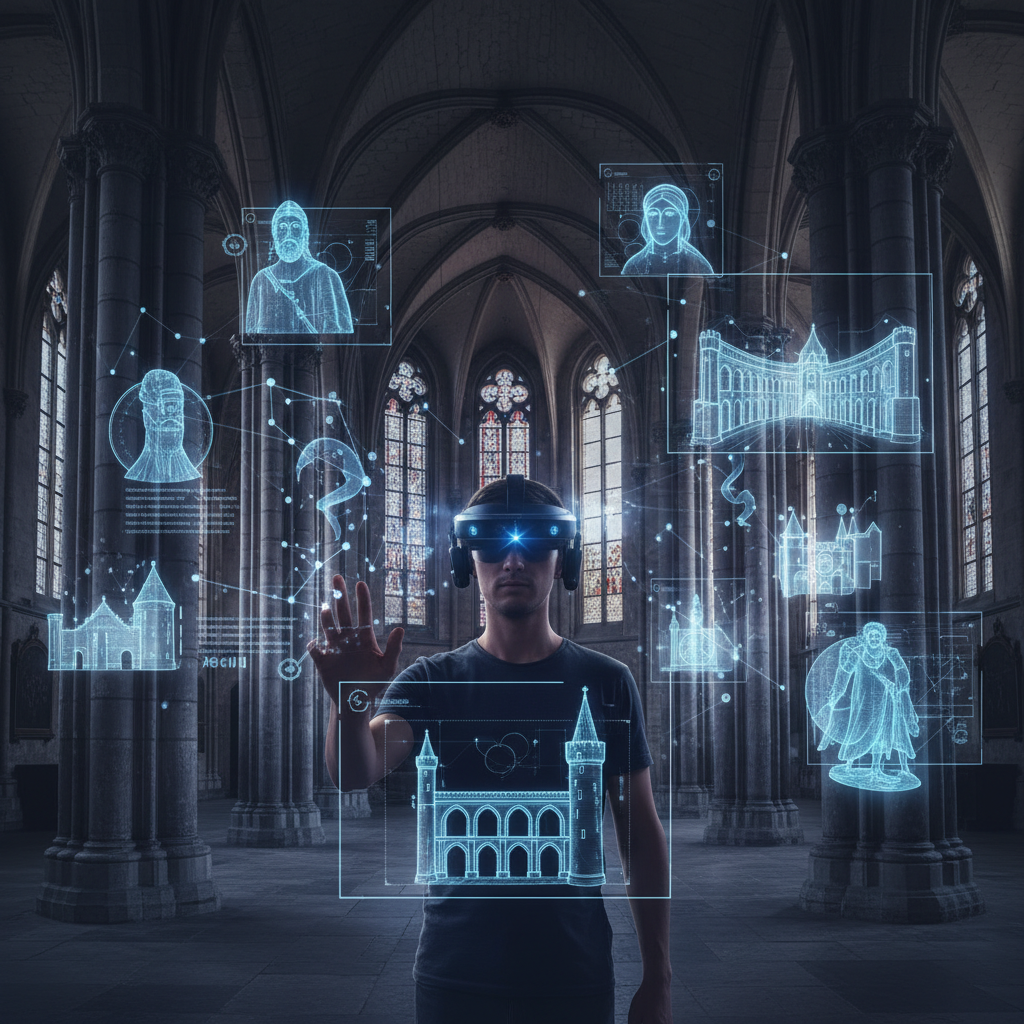
The pioneering initiative showcasing The History of Europe Gets Immersive via HoloLens 2 Experience at St. Peter's Church in Belgium stands as a powerful testament to the transformative potential of mixed reality. By seamlessly blending the digital with the physical, it has brought lost historical treasures back into the light, offering visitors an intimate and unforgettable connection with Europe's rich past. The HoloLens 2, with its advanced optical system, precise tracking, and intuitive interaction capabilities, has proven itself an invaluable tool for cultural preservation and immersive storytelling.
This groundbreaking project not only enhances the visitor experience at St. Peter's Church but also sets a new standard for how cultural institutions worldwide can leverage XR technology. It demonstrates that with careful planning and innovative execution, we can make history more accessible, engaging, and alive than ever before. As the capabilities of XR continue to evolve, we can look forward to even more spectacular applications that will reshape our understanding and appreciation of heritage.
Ready to explore the latest innovations in XR technology that make such experiences possible? Discover cutting-edge devices and accessories that are shaping the future of immersive reality. Explore the New Arrivals at MetanexusXR Today!
User Reviews:
"Absolutely breathtaking! Seeing the altarpiece appear right before my eyes in its original spot was an emotional and unforgettable experience. It truly felt like stepping back in time." - Eleanor V., History Enthusiast
"I've been to St. Peter's many times, but this HoloLens 2 experience completely changed my perspective. The detail and accuracy were astounding. A must-do for anyone visiting Belgium!" - Marc L., Local Guide
Engaging Discussion Questions:
- What other historical sites or lost artifacts do you think would benefit most from a HoloLens 2 immersive experience?
- How do you believe immersive technologies like AR and VR will change the way history is taught in schools over the next decade?
- Beyond cultural heritage, what other industries do you see being profoundly transformed by the advanced capabilities of the HoloLens 2?


