


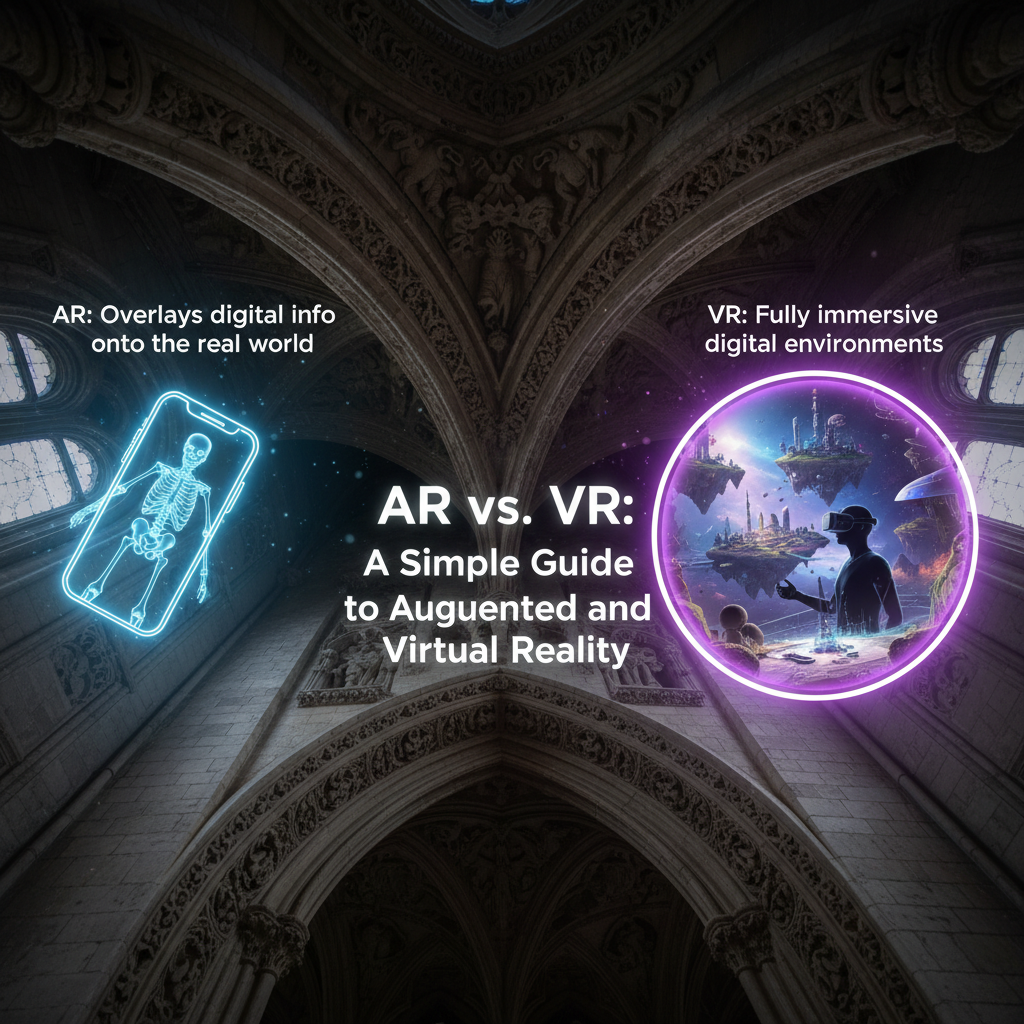
The world of extended reality (XR) is rapidly expanding, bringing forth innovative ways to interact with digital content and our physical environment. At its core, this technological revolution is often simplified to a fundamental distinction: Augmented Reality (AR) and Virtual Reality (VR). Understanding the nuances between these two powerful technologies is crucial for anyone looking to navigate the future of digital interaction, from casual users to industry professionals. This article serves as MetanexusXR's definitive resource for comprehending the core concepts of AR vs. VR: A Simple Guide to Augmented and Virtual Reality. We'll explore their unique characteristics, technical foundations, and the diverse applications that are shaping our world.
Unpacking Augmented Reality (AR): Bridging the Digital and Physical
Augmented Reality (AR) enriches our perception of the real world by overlaying digital information onto it. Unlike VR, AR does not aim to replace your environment but rather to enhance it, allowing users to remain fully present in their physical surroundings while interacting with virtual elements. Imagine seeing 3D models of furniture in your living room before you buy them, or having digital instructions float above a machine you're repairing – that's the essence of AR.
Key Features and Specifications of AR
- Real-World View: Users maintain a direct, unobstructed view of their physical environment, augmented by digital content.
- Interaction with Reality: Digital objects are anchored to and interact with real-world surfaces and spaces, creating a seamless blend.
- Hardware Accessibility: AR is highly accessible, primarily running on everyday devices like smartphones and tablets. Dedicated AR headsets, such as those from Microsoft (HoloLens) and Magic Leap, offer more advanced, spatial computing experiences with features like robust spatial mapping, gesture recognition, and wider fields of view. These specialized devices typically feature transparent lenses or optical waveguides to project digital images directly into the user's line of sight.
- Contextual Information: AR excels at delivering context-specific information, making it invaluable for navigation, training, and retail.
AR Applications and Use Cases
AR's ability to blend digital with physical makes it incredibly versatile. In education, AR apps can bring textbooks to life with interactive 3D models. Healthcare professionals use it for surgical planning and remote assistance, overlaying patient data or anatomical guides directly onto the real world. Retailers leverage AR for 'try-before-you-buy' experiences, from virtual clothing try-ons to placing furniture in your home. Industrial sectors benefit from AR for maintenance, assembly, and quality control, providing workers with real-time instructions and data. Mobile gaming, exemplified by titles like Pokémon GO, popularized AR by allowing players to interact with virtual creatures in their physical surroundings. The potential for AR vs. VR: A Simple Guide to Augmented and Virtual Reality in practical, everyday scenarios is immense.
Delving into Virtual Reality (VR): Worlds Reimagined
Virtual Reality (VR) offers a completely immersive experience, transporting users into entirely simulated digital environments. It aims to create a strong sense of presence, making you feel as if you are truly within the virtual world, completely detached from your physical surroundings. Whether exploring fantastical landscapes, engaging in intense gaming, or participating in virtual meetings, VR provides an unparalleled level of immersion.
Key Features and Specifications of VR
- Full Immersion: VR headsets completely block out the real world, providing a 360-degree digital environment.
- Dedicated Hardware: VR requires specialized headsets, ranging from standalone devices (like the Meta Quest series) to tethered systems (such as HTC Vive, Valve Index, PlayStation VR) that connect to powerful PCs or gaming consoles. These headsets feature high-resolution displays (e.g., 2K per eye or higher), wide fields of view (typically 90-110 degrees), and high refresh rates (90Hz, 120Hz, or higher) to minimize motion sickness and provide smooth visuals.
- Advanced Tracking: Sophisticated head and hand tracking systems (e.g., inside-out tracking, external base stations) allow for natural interaction and movement within the virtual space. Haptic feedback controllers enhance the sense of touch.
- Sensory Engagement: Beyond visuals, VR often incorporates spatial audio and haptic feedback to heighten the sense of presence.
VR Applications and Use Cases
The applications for VR are as vast as the imagination. Gaming is a significant driver, offering experiences from epic adventures to competitive esports. Entertainment extends to virtual concerts, cinematic experiences, and interactive storytelling. In training and simulation, VR is revolutionary for fields like aviation, military, and medicine, allowing professionals to practice complex procedures in a risk-free environment. Architects and designers use VR to walk through virtual prototypes before construction begins, while remote collaboration tools are creating new paradigms for virtual meetings and shared workspaces. For those ready to dive into virtual worlds, finding the right gear is crucial. Discover top-tier equipment and peripherals at MetanexusXR's extensive VR collection, where quality meets innovation. From powerful headsets to essential accessories, MetanexusXR offers a complete selection to enhance your extended reality journey. When considering AR vs. VR: A Simple Guide to Augmented and Virtual Reality, it's clear both have distinct advantages.
Understanding the Core Differences: AR vs. VR
While both AR and VR fall under the umbrella of Extended Reality (XR), their fundamental approaches to blending digital and physical worlds are distinct. The primary differentiator lies in the user's connection to the real world.
Immersion vs. Augmentation
VR is about complete immersion. It aims to transport you, cutting off sensory input from your physical surroundings to fully engage you in a virtual one. AR, conversely, is about augmentation. It keeps you firmly rooted in your physical environment while layering digital content on top, enhancing your perception rather than replacing it. This difference impacts everything from hardware design to typical use cases.
Hardware and Interaction
VR typically requires a dedicated headset that encloses your field of vision, often coupled with controllers for interaction. These systems can be tethered to powerful computers for high-fidelity experiences or standalone for greater mobility. AR, while having dedicated headsets like HoloLens, is more commonly experienced through ubiquitous devices like smartphones and tablets, leveraging their cameras and screens to overlay digital content. Explore a range of advanced VR headsets and accessories at MetanexusXR's VR Accessories collection.
Practicality vs. Escape
AR often leans towards practical applications, providing contextual information or tools that aid real-world tasks. It's about making the real world smarter and more interactive. VR, on the other hand, often serves as an escape, offering experiences that are difficult or impossible in reality, whether for entertainment, intensive training, or exploration of entirely new worlds. This distinction is vital when considering the broad scope of AR vs. VR: A Simple Guide to Augmented and Virtual Reality.
The Future of XR: A Converging Path
The lines between AR and VR are beginning to blur with the advent of Mixed Reality (MR) technologies, which offer a spectrum of experiences from full augmentation to full immersion. MR devices, such as advanced standalone headsets, can seamlessly transition between displaying the real world with digital overlays and fully immersive virtual environments. This convergence promises even more versatile and dynamic experiences, allowing users to choose the level of immersion and reality interaction best suited for their needs. The ongoing evolution of hardware, from lighter AR glasses to more powerful standalone VR systems, continues to push the boundaries of what's possible in extended reality.
Both Augmented Reality and Virtual Reality represent monumental leaps in how we interact with technology and perceive our world. While VR offers an unparalleled escape into digital realms, AR promises a more integrated, enhanced interaction with our physical surroundings. Understanding the fundamental differences detailed in this guide to AR vs. VR: A Simple Guide to Augmented and Virtual Reality empowers you to appreciate the unique strengths of each technology and envision their future impact. As these fields continue to evolve, the possibilities for innovation and application are truly limitless.
Ready to explore the cutting edge of XR technology? Discover the latest in XR technology and find the perfect device to begin your journey into augmented or virtual worlds.
What Our Users Are Saying:
"This guide perfectly explained the 'AR vs. VR' debate I've been having with my friends! Clear, concise, and really highlighted the practical differences. Now I know what I'm looking for!" - *Maya K.*
"As someone new to XR, I found this 'Simple Guide to Augmented and Virtual Reality' incredibly helpful. The use cases really brought the concepts to life. Great job!" - *Liam S.*
Join the Conversation!
- Which aspect of AR or VR are you most excited about for the future?
- Do you prefer the immersive escape of VR or the real-world enhancement of AR, and why?
- What's one innovative application of AR or VR you've experienced or wish existed?


