


In the rapidly evolving landscape of extended reality (XR) and artificial intelligence, certain innovations stand out as pivotal. One such development is the advancement of wearable technology designed not just for user interaction, but for understanding the world around us. This is precisely where the Meta Aria Gen 2 Smart Glasses: A Leap for AI and Accessibility come into sharp focus. These aren't just another pair of smart glasses; they represent a significant step forward in how AI perceives and interacts with human environments, laying critical groundwork for future XR applications and assistive technologies. As we delve into their capabilities, it's clear that these glasses are more than a device; they're a research platform pushing the boundaries of what's possible, a topic we frequently explore at MetanexusXR.
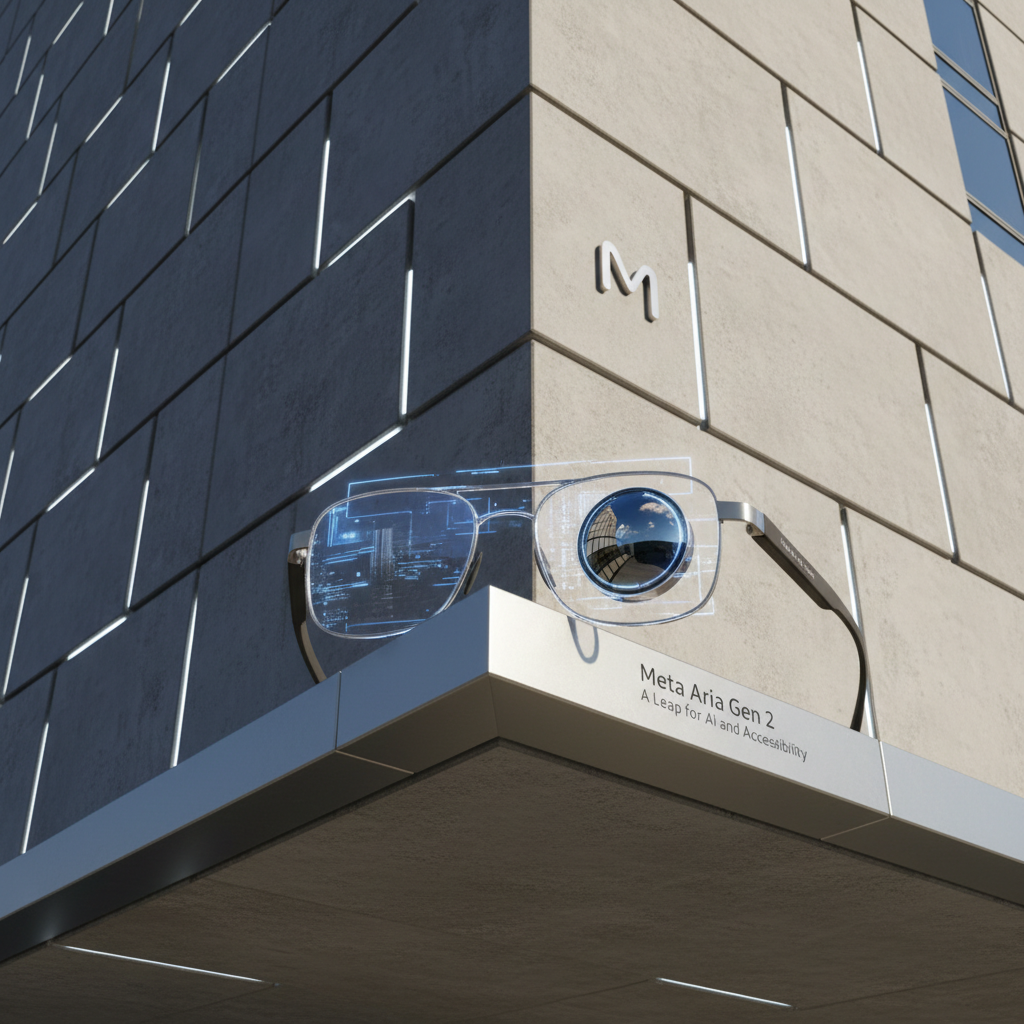
Meta Aria Gen 2 Smart Glasses: A Leap for AI and Accessibility – Unpacking the Core Technology
The Meta Aria Gen 2 Smart Glasses are designed as a sophisticated research platform, a stark evolution from their predecessors. Unlike consumer-grade smart glasses that prioritize visual displays, the Aria Gen 2's primary function is data capture, serving as a 'first-person camera' for AI development. This distinction is crucial: they are not built for augmented reality overlays for the wearer, but rather to collect rich, multimodal data about the wearer's environment, movements, and interactions to train advanced AI models.
At their heart lies a powerful array of sensors. High-resolution cameras capture detailed visual information, providing a comprehensive understanding of physical spaces and objects. These are complemented by advanced depth sensors, which create 3D maps of the surroundings, enabling AI to perceive spatial relationships and object dimensions with unprecedented accuracy. Eye-tracking cameras monitor the wearer's gaze, offering invaluable insights into attention, focus, and intent – a critical component for developing intuitive human-computer interfaces. Integrated Inertial Measurement Units (IMUs) track head and body movements, providing context for actions and interactions. Furthermore, a sophisticated microphone array captures ambient sound and speech, adding another layer of contextual understanding for AI algorithms.
Driving this sensor suite is the powerful Qualcomm Snapdragon XR2 Gen 2 processor. This on-board computing power allows for real-time processing of vast amounts of data, enabling immediate analysis and the execution of complex AI models directly on the device. This local processing capability is vital for efficiency, responsiveness, and reducing reliance on constant cloud connectivity, although Wi-Fi and Bluetooth are present for data offloading and connectivity. Compared to the first generation, the Aria Gen 2 boasts a smaller, lighter, and more comfortable form factor, alongside improved sensor capabilities and enhanced battery life, making them more practical for extended research sessions.
The Transformative Potential of Meta Aria Gen 2 Smart Glasses for Future XR and Assistive Innovations
The data collected by the Meta Aria Gen 2 Smart Glasses is not just raw information; it's the bedrock for future AI breakthroughs, particularly in areas like contextual awareness, social understanding, and assistive technologies. By learning from real-world human interactions and environments, AI can evolve to better anticipate needs, understand social cues, and provide more natural and helpful assistance. For instance, the combination of visual, depth, and eye-tracking data can help AI understand what a person is looking at, what they intend to do, and the context of their actions, paving the way for truly intelligent AR experiences. When considering the broader XR ecosystem, these advancements will undoubtedly influence future consumer devices, enhancing everything from gaming to professional tools. Explore more about the foundational technologies shaping this future at MetanexusXR's extensive collection.
The emphasis on accessibility is particularly compelling. Imagine a future where these smart glasses, or their consumer-ready descendants, can provide real-time transcription for the hearing impaired, instantly converting spoken words into text overlays. For individuals with visual impairments, AI-powered object recognition and spatial mapping could offer enhanced navigation and descriptions of their surroundings, identifying obstacles, people, or points of interest. Memory aids could become a reality, with the glasses subtly reminding users of names, dates, or tasks based on context. These applications are not far-fetched sci-fi; they are direct outcomes of the research currently being conducted with the Aria Gen 2 platform.
The data privacy aspects are also carefully considered. All collected data is subject to rigorous anonymization and redaction processes, ensuring that personal identifiable information like faces and license plates are obscured before being used for research. This commitment to privacy is essential as these technologies become more integrated into our daily lives, ensuring trust and ethical development. The Aria SDK provides researchers with the tools to work with this data, fostering innovation in computer vision, robotics, and human-computer interaction.
The development of sophisticated XR accessories is also directly influenced by the progress of such research platforms. As AI gains a deeper understanding of human interaction within virtual and augmented environments, the design and functionality of peripherals will become more intuitive and seamlessly integrated. For those looking to enhance their current XR experiences, a wide range of cutting-edge VR accessories are already available, often benefiting from the same underlying principles of user-centric design that platforms like Aria Gen 2 are exploring.
In essence, the Meta Aria Gen 2 Smart Glasses are not just a product; they are a statement of intent. They signify a commitment to building a future where AI and XR work in harmony to enhance human capabilities, break down barriers, and create a more accessible and intelligent world. Their role as a research tool for AI/ML engineers, computer vision specialists, and HCI researchers cannot be overstated, as they drive the foundational insights that will power the next generation of immersive experiences and assistive technologies. The insights gained from these glasses will undoubtedly shape how we interact with the digital and physical worlds for decades to come, bringing us closer to a truly intuitive and helpful AI companion.
The Meta Aria Gen 2 Smart Glasses represent a significant milestone in the journey towards sophisticated, context-aware AI and truly accessible XR technologies. While currently a research platform, the innovations they enable promise to revolutionize how we interact with technology and how technology assists us in our daily lives. From enhanced navigation for the visually impaired to real-time communication aids, the potential for a more inclusive future is immense. The ongoing research with these glasses is not just about building better hardware; it's about building a better understanding of humanity itself, translating that understanding into intelligent systems that genuinely serve our needs.
Stay ahead of the curve and explore the latest advancements in XR technology and accessories that are inspired by these groundbreaking innovations. Discover products that bridge the gap between today's technology and tomorrow's possibilities by visiting MetanexusXR's New Arrivals.
What people are saying:
Review 1: XRInnovator23
"As an AI researcher, the capabilities of Aria Gen 2 are mind-blowing. The fidelity of the multi-modal data capture is exactly what we need to train next-gen contextual AI. This isn't just an iteration; it's a paradigm shift for understanding human behavior in real environments."
Review 2: TechForGoodAdvocate
"The potential for accessibility features from this research is truly inspiring. Imagine real-time object recognition or advanced hearing assistance integrated into everyday glasses. This technology could genuinely change lives for millions, making the world more navigable and inclusive."
Engaging Discussion Questions:
- What specific future accessibility features are you most excited to see emerge from the research enabled by the Meta Aria Gen 2 Smart Glasses?
- How do you envision the data collected by these research glasses shaping the development of future consumer-grade AR smart glasses?
- What ethical considerations around data privacy and pervasive sensing do you think need to be continuously addressed as this technology evolves?


