


The digital frontier is expanding at an unprecedented rate, and at its heart lies Virtual Reality. For years, VR promised a revolution, and now, that promise is undeniably manifesting into a tangible reality. We are on the cusp of an explosive market expansion, poised to reshape industries and daily life as we know it. The headline says it all: Virtual Reality's Big Boom: How VR Growth Is Set to Skyrocket by $339 Billion by 2033. This isn't merely a projection; it's a testament to the accelerating innovation and increasing adoption across consumer and enterprise sectors. Companies like MetanexusXR are at the forefront, providing cutting-edge hardware and accessories that enable this immersive future. The journey from niche technology to mainstream powerhouse is well underway, driven by advancements that make VR more accessible, powerful, and indispensable than ever before.
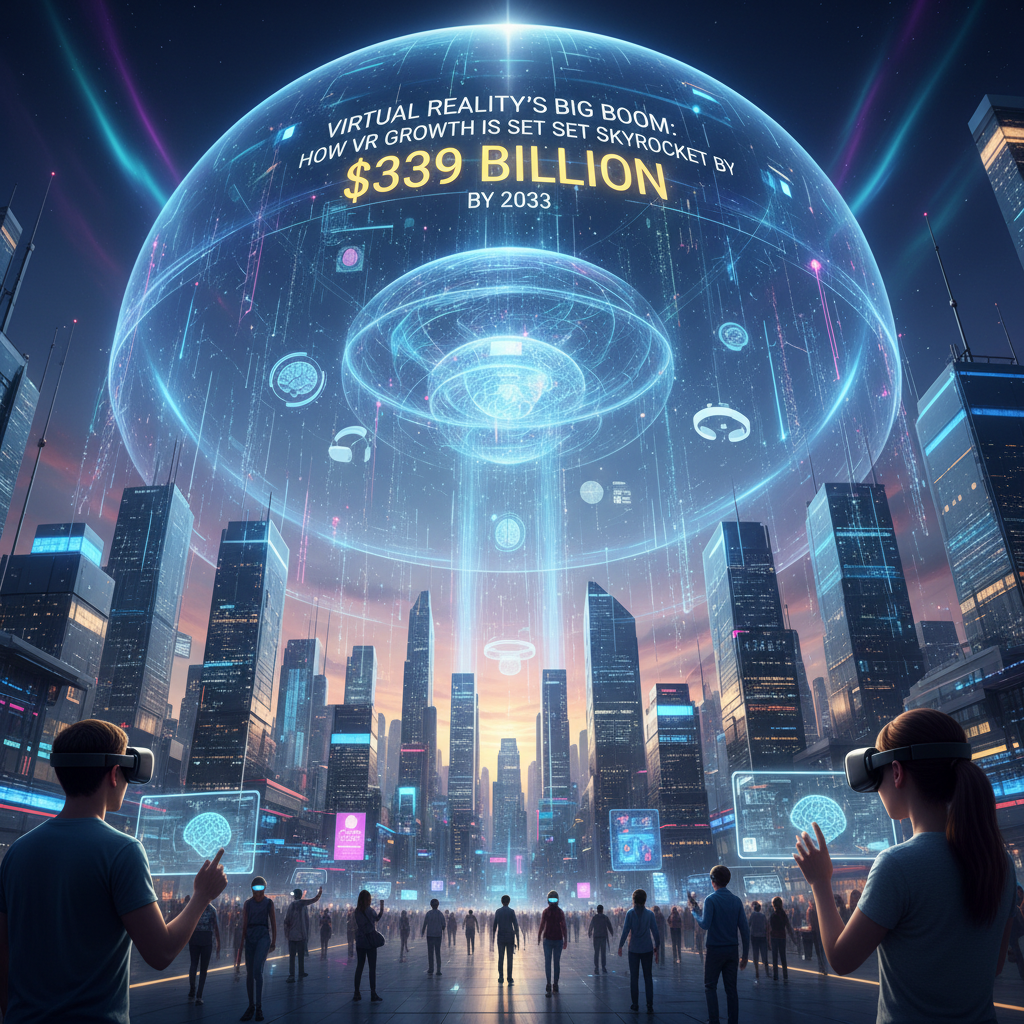
The Unprecedented Surge: Understanding Virtual Reality's Big Boom: How VR Growth Is Set to Skyrocket by $339 Billion by 2033
The global Virtual Reality market is not just growing; it's undergoing a seismic expansion, projected to reach an astounding $339 billion by 2033. This remarkable figure reflects a Compound Annual Growth Rate (CAGR) estimated to be well over 30%, highlighting the rapid acceleration of VR adoption worldwide. This isn't just about more people buying headsets; it's about the deep integration of VR technologies into diverse aspects of our economy and society.
Technological Pillars of VR's Expansion
The foundation of this immense growth is built upon significant technological advancements. Modern VR headsets are a far cry from their predecessors, boasting specifications that deliver truly immersive and comfortable experiences. Key improvements include:
- Display Resolution: Many contemporary VR systems now offer resolutions approaching or exceeding 4K per eye, delivering stunning visual fidelity that minimizes the 'screen-door effect' and makes virtual environments almost indistinguishable from reality.
- Field of View (FOV): Wider fields of view, often in the range of 100-120 degrees, dramatically enhance immersion by encompassing more of the user's peripheral vision, reducing the tunnel-vision sensation of earlier models.
- Refresh Rates: Higher refresh rates (e.g., 90Hz, 120Hz, and even higher) are crucial for reducing motion sickness and creating smoother, more believable movement within virtual worlds.
- Standalone Capability: The proliferation of powerful mobile chipsets, such as those in the Qualcomm Snapdragon XR series, has enabled high-performance standalone headsets. These devices offer complete freedom of movement without being tethered to a PC, making VR more accessible and user-friendly.
- Advanced Tracking Systems: Inside-out tracking, which uses cameras on the headset itself to map the environment and track user movement, has eliminated the need for external sensors, simplifying setup and expanding play spaces. Eye-tracking technology is also becoming standard, enabling foveated rendering (optimizing resolution only where the user is looking) for enhanced performance and realism.
- Haptic Feedback: More sophisticated haptic systems in controllers and full-body suits are providing a tactile dimension to VR, allowing users to 'feel' virtual objects and interactions, adding another layer of immersion.
- Ergonomics and Design: Headsets are becoming lighter, more balanced, and more comfortable for extended use, significantly reducing fatigue and making VR accessible to a wider audience.
These technical specifications are not just incremental upgrades; they represent a paradigm shift in what VR can offer. They are making virtual experiences so compelling and practical that they are transitioning from novelty to necessity across a multitude of applications. For those looking to dive into this evolving landscape, exploring advanced VR accessories can significantly enhance the experience, from improved audio solutions to ergonomic comfort straps.
Transformative XR Use Cases Driving Virtual Reality's Big Boom: How VR Growth Is Set to Skyrocket by $339 Billion by 2033
Beyond entertainment, the true engine of Virtual Reality's Big Boom: How VR Growth Is Set to Skyrocket by $339 Billion by 2033 lies in its transformative applications across various industries, collectively known as eXtended Reality (XR). These use cases leverage VR's unique ability to create immersive, interactive, and often simulated environments.
Gaming & Entertainment: Beyond the Screen
While gaming remains a significant driver, it's evolving. VR offers hyper-realistic graphics, social multi-player platforms where players can interact as avatars, and new forms of storytelling that put the user at the center of the narrative. Esports in VR is also an emerging field, pushing competitive gaming into new dimensions.
Enterprise & Industry: Revolutionizing Workflows
The enterprise sector is where VR is demonstrating its most profound impact, driving efficiency, safety, and innovation.
- Healthcare: VR is revolutionizing medical training with hyper-realistic surgical simulations, allowing aspiring surgeons to practice complex procedures without risk. It's also used for pain management through distraction therapy, rehabilitation for stroke patients, and exposure therapy for mental health conditions like PTSD and phobias.
- Education & Training: From virtual classrooms that transport students to ancient Rome or the surface of Mars, to highly specialized vocational training for fields like aviation or heavy machinery operation, VR provides safe, repeatable, and engaging learning environments. Corporate onboarding and remote collaboration also benefit from immersive virtual meeting spaces.
- Manufacturing & Design: Engineers and designers use VR for virtual prototyping, allowing them to visualize and iterate on product designs in 3D before physical production. This significantly reduces costs and accelerates development cycles. Digital twins, virtual replicas of physical assets, are also explored in VR for predictive maintenance and operational optimization. Companies are increasingly investing in high-performance VR equipment to facilitate these advanced design reviews.
- Retail & E-commerce: VR enables virtual showrooms where customers can interact with products in 3D, try on clothes virtually, or visualize furniture in their own homes before purchase. This enhances the online shopping experience and reduces return rates.
- Real Estate & Architecture: Prospective buyers can take immersive virtual tours of properties from anywhere in the world, experiencing the layout and ambiance as if they were physically present. Architects can walk clients through virtual models of unbuilt structures, making design decisions collaborative and intuitive.
- Military & Defense: Advanced VR simulations provide realistic training scenarios for soldiers, pilots, and other personnel, preparing them for high-stakes situations in a controlled environment.
The versatility of VR, coupled with its increasing technical sophistication, ensures its continued integration into these and many other sectors. The market for VR accessories is also expanding rapidly, catering to specific professional and recreational needs, from improved tracking to enhanced audio solutions.

The journey of Virtual Reality has been one of relentless innovation, culminating in a period of exponential growth. The projection of a $339 billion market by 2033 is not just a number; it's a clear indicator of VR's profound impact across entertainment, education, healthcare, manufacturing, and beyond. As hardware becomes more powerful, comfortable, and accessible, and as content ecosystems mature, VR will continue to break down barriers between the physical and digital worlds. This isn't merely about new devices; it's about a new way of experiencing, learning, working, and connecting. The future is immersive, and it's arriving faster than we think.
Ready to experience the future today? Explore the latest innovations and elevate your immersive experiences at MetanexusXR New Arrivals.
What Our Users Are Saying:
"I never thought VR could be this impactful. My MetanexusXR headset changed how I approach my architectural designs – truly a game-changer!" - Alex K.
"The training simulations for my team have been revolutionized by VR. The clarity and realism are incredible, making complex concepts easy to grasp." - Dr. Chen
Join the Conversation:
- What industry do you believe will be most transformed by VR in the next five years?
- What specific technological advancement are you most excited to see in future VR headsets?
- How do you envision VR changing your daily life or work by 2033?


